Ready to elevate your Business Intelligence game?
We've got an engaging video, perfect for all skill levels.
Discover how to get started with IRIS BI, optimize cube performance, and drive analytics adoption. Plus, get a sneak peek at what's next!
A database model is a type of data model that determines the logical structure of a database and fundamentally determines in which manner data can be stored, organized and manipulated. The most popular example of a database model is the relational model, which uses a table-based format.
Ready to elevate your Business Intelligence game?
We've got an engaging video, perfect for all skill levels.
Discover how to get started with IRIS BI, optimize cube performance, and drive analytics adoption. Plus, get a sneak peek at what's next!
Dynamic Entities (objects and arrays) in IRIS are incredibly useful in situations where you are having to transform JSON data into an Object Model for storage to the database, such as in REST API endpoints hosted within IRIS. This is because these dynamic objects and arrays can easily serve as a point of conversion from one data structure to the other.
Dynamic Objects are very similar to the standard ObjectScript object model you get when you create a new instance of a class object, but with some key differences:
Is there a way to Remove specific all Addresses from a Provider.Individual.Address before reinserting the Addresses from an HL7 message in Provider Directory?
Most fields we can call %clearFields() however since Addresses come from multiple locations we need to isolate and treat Addresses from this HL7 source as a snapshot.
Thanks
Scott
Whats the significance of creating an Index with Data Keyword in Index
Maybe this is well known but wanted to help share.
Consider that you have the following persistent class defintions
An Invoice Class with a property reference to Provider
Hello,
Our software commonly returns a full result set to the client and we use the DataTables plugin to display table data. This has worked well, but at datasets grow larger, we are trying to move some of these requests server-side so the server handles the bulk of the work rather than the client. This has had me scratching my head in so many ways.
I'm hoping I can get a mix of general best practice advice but also maybe some IRIS specific ideas.
Some background
InterSystems has been at the forefront of database technology since its inception, pioneering innovations that consistently outperform competitors like Oracle, IBM, and Microsoft. By focusing on an efficient kernel design and embracing a no-compromise approach to data performance, InterSystems has carved out a niche in mission-critical applications, ensuring reliability, speed, and scalability.
A History of Technical Excellence
In the world of APIs, REST is very extended. But what happens when you need more flexibility in your data-fetching strategies? For instance letting the client to choose what fields is going to receive. Enter GraphQL, a query language for your APIs that provides a flexible alternative to REST.
In this post, we will:
Hello!
So my question is quite simple, Do the different data models of Intersystems all support the ACID properties?
I assume that for the SQL data model implementation it does, But does it also work for global (i.e the hierarchical data model)?
I searched the docs and the different articles, It seems for example that here its implied that the different data models of Intersystems DO indeed support the ACID properties and allow for safe insertion, deletion etc... in concurrent operations to the server that is.
Would love to get a clarification, Thx!
Hi,
A customer today asked whether we could offer anything like the nice lineage charts that dbt offers, based on SQL view metadata. They are very much aware of our dbt-iris adapter, but were asking in the context of their landing area, which combines foreign tables and views, ahead of possibly using dbt for onward transformations.
In today's data landscape, businesses encounter a number of different challenges. One of them is to do analytics on top of unified and harmonized data layer available to all the consumers. A layer that can deliver the same answers to the same questions irrelative to the dialect or tool being used. InterSystems IRIS Data Platform answers that with and add-on of Adaptive Analytics that can deliver this unified semantic layer. There are a lot of articles in DevCommunity about using it via BI tools. This article will cover the part of how to consume it with AI and also how to put some insights
Hi All,
On February 8, 2024, we asked for input from the IRIS community regarding exam topics for our InterSystems IRIS Developer Professional exam. We will close the window for providing feedback on the exam topics on Friday, March 8, 2024. If you would like to have your say in what topics are covered on the exam, this is your last chance!
How can I access the survey? You can access it here
Hello Everyone,
The Certification Team of InterSystems Learning Services is developing an InterSystems IRIS Developer Professional certification exam, and we are reaching out to our community for feedback that will help us evaluate and establish the contents of this exam.
Note: This exam will replace the current InterSystems IRIS Core Solutions Developer Specialist exam when it is released. Please note from the target role description below that the focus of the new exam will be more on developer best practices and a lot less on the ObjectScript programming language.
Good morning,
First of all thanks for your help and time.
We find ourselves at a crossroads in our development journey, and we're reaching out to the community for insights and guidance regarding a critical aspect of our data management strategy.
Our current challenge revolves around the persistence of data in Globals, specifically when it comes to purging. The issue at hand is that, despite purging, data stored in Globals under the current %Persistent classes remains intact. To address this, we are contemplating a shift from %Persistent to %SerialObject for each relevant class.
Hello Community,
I have couple of question about the DynamicSQL.
1. The %ObjectSelectMode is working perfectly in the DynamicSQL for the object property in direct query. However this is not supported for class query. Is there any way to resolve this / Get the object value for class query result.
2. What is the reason behind for a stored query prepared using %PrepareClassQuery() you must use the %Get("fieldname") method.
Try a hands-on exercise in the language of your choice to get familiar with the multi-model architecture of InterSystems IRIS!
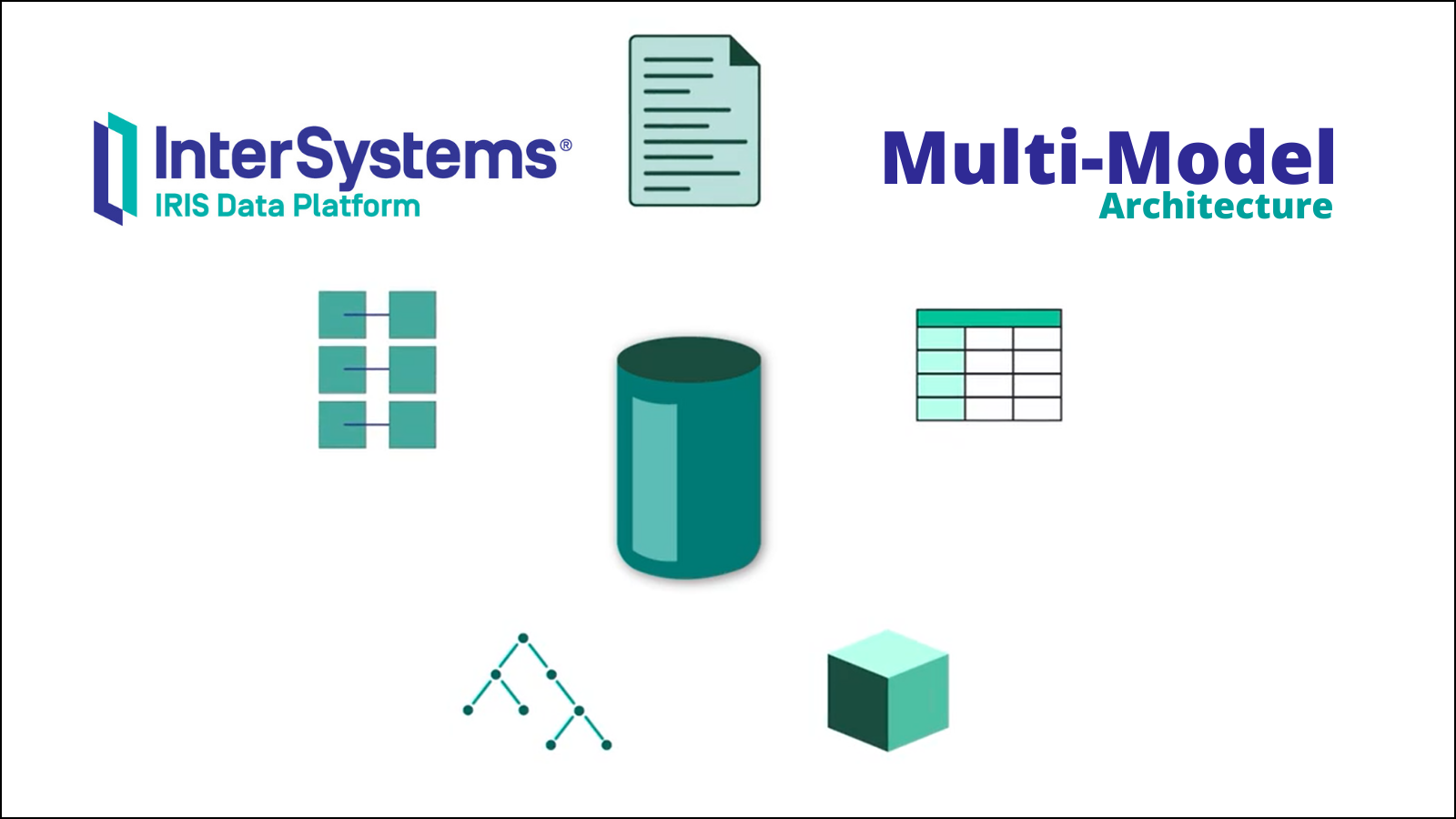
These recently updated exercises are available in ObjectScript, Python, Java, and .NET.
Before we start talking about databases and different data models that exist, first we'd better talk about what a database is and how to use it.
A database is an organized collection of data stored and accessed electronically. It is used to store and retrieve structured, semi-structured, or raw data which is often related to a theme or activity.
At the heart of every database lies at least one model used to describe its data. And depending on the model it is based on, a database may have slightly different characteristics and store different types of data.
A Quick start to include InterSystems IRIS Tables in Data Build Tool using Python.
It uses the sqlalchemy plugin with sqlalchemy-iris which enables the iris strategy for duckdb as a source for a dbt project.
EDIT: If you stumbled here on Google Geuse for "iris dbt", your best bet is to checkout dbt-iris for the native adapter implementation that follows dbt guidelines.
Hello community,
is there anything special to consider when running a foundation production regarding purge jobs (Ens.Util.Tasks.Purge)? I am thinking specifically of the QuickStreams, which according to my information are stored in a temporary database until the system is restarted. Since a system reboot is much less frequent then the purges, I wonder what happens to the QuickStreams whose messages and headers have already been purged. Is there a way to view Quickstreams (not content, but rather metadata) e.g. via the Management Portal?
Thanks for your comments and hints,
best regards, Martin
Hi
Is there a way to read JSON and transform it (in DTL) by using a VDOC of this JSON (without transform it to internal message) like I can do with HL7 or XML?
If it possible, I guess that I should have a schema of the JSON so the second question is how to build a schema for JSON and load it to the IRIS?
Thanks, Ori.
Hello DC Members,
Please welcome the new video on InterSystems Developers YouTube:
⏯ Ten Times Faster Queries with Columnar Storage @ Global Summit 2022
Hello all; I am using a one-to-many relationship. I have a Claim (one), in a relationship with Lines (many), but the Claim is storing a list of Lines IDs, rather than the Lines storing the Claim Id. This seems upside down, and not what I expected.
Class Claim

{
    Relationship ClaimLineRel as ClaimLine [Cardinality = many, Inverse = Claim];
}

Class ClaimLine
{
    Relationship Claim as Claim [ Cardinality = one, Inverse = ClaimLineRel, OnDelete = cascade];
    Index ClaimIndex on Claim;
}
But the storage globals for Claim show data in the ClaimLine spot:
Hey Community,
I have an scenario, please advise or suggest possible ways to solve it.
So i have a persistent class to test results of a diagnostic laboratory. The properties are
This project was thought of when I was thinking of how to let Python code deal naturally with the scalable storage and efficient retrieving mechanism given by IRIS globals, through Embedded Python.
My initial idea was to create a kind of Python dictionary implementation using globals, but soon I realized that I should deal with object abstraction first.
So, I started creating some Python classes that could wrap Python objects, storing and retrieving their data in globals, i.e., serializing and deserializing Python objects in IRIS globals.
Hi Community,
This post is a introduction of my openexchange iris-globals-graphDB application.
In this article I will demonstrate how to save and retrieve Graph Data into InterSystems Globals with the help of Python Flask Web Framework and PYVIS Interactive network visualizations Library
Hi Developers!
Here're the technology bonuses for the InterSystems IRIS Globals Contest 2022 that will give you extra points in the voting:
See the details below.
Hey Coommunity,
Learn about InterSystems globals, the data model native to InterSystems IRIS® data platform that makes data storing efficient and provides the flexibility your data needs:
Hey community! How are you doing?
I hope to find everyone well, and a happy 2022 to all of you!
Over the years, I've been working on a lot of different projects, and I've been able to find a lot of interesting data.
But, most of the time, the dataset that I used to work with was the customer data. When I started to join the contest in the past couple of years, I began to look for specific web datasets.
I've curated a few data by myself, but I was thinking, "This dataset is enough to help others?"
i'm trying to extend both the MemberEnrollment and the MedicalClaim objects in HS. The CareProvider is perfect for some of my extensions (Operating provider, referring provider, third-party insurer), but the documentation says https://docs.intersystems.com/irisforhealthlatest/csp/docbook/DocBook.U…:
I need something that is just like a CareProvider, and I will be using the CarePRoviderType as a CodeTableDetail.