#InterSystems Data Platform Blog

0 Followers · 28 Posts

This group consists of fairly long technical posts regarding InterSystems Technology features and experience.

Every post in this group is a story of a developer or engineer who wants to share his experience related to InterSystems Data Platform with you.

Every post in this group contains either snippets of code or even ready to use projects with sources on Github or with working demos of InterSystems Technology.

Every post is reviewed by InterSystems specialists through a special reviewing procedure.

Subscribe to the group and you'll get weekly posts with essentials of experience on developing, testing, deploying, maintaining solutions that utilize InterSystems Data Platform technology: multimodel DBMS Caché,  Platform for connected applications Ensemble, analytics technology DeepSee and unstructured data management technology  - iKnow.

Yes, you can contribute to this group. If you want to share your experience, promote interesting development tool or a framework to InterSystems Developer Community in the form of a long article reviewed by InterSystems engineers - please contact me.

Evgeny Shvarov,

InterSystems Community Manager
Article Murray Oldfield · Nov 14, 2019 6m read

Released with no formal announcement in IRIS preview release 2019.4 is the /api/monitor service exposing IRIS metrics in Prometheus format. Big news for anyone wanting to use IRIS metrics as part of their monitoring and alerting solution. The API is a component of the new IRIS System Alerting and Monitoring (SAM) solution that will be released in an upcoming version of IRIS.

2
7 2165
Article Mark Bolinsky · Jan 29, 2016 4m read

** Revised Feb-12, 2018

While this article is about InterSystems IRIS, it also applies to Caché, Ensemble, and HealthShare distributions.

Introduction

Memory is managed in pages.  The default page size is 4KB on Linux systems.  Red Hat Enterprise Linux 6, SUSE Linux Enterprise Server 11, and Oracle Linux 6 introduced a method to provide an increased page size in 2MB or 1GB sizes depending on system configuration know as HugePages.

9
5 5651
Article Murray Oldfield · Mar 8, 2016 8m read

Your application is deployed and everything is running fine. Great, hi-five! Then out of the blue the phone starts to ring off the hook – it’s users complaining that the application is sometimes ‘slow’. But what does that mean? Sometimes? What tools do you have and what statistics should you be looking at to find and resolve this slowness? Is your system infrastructure up to the task of the user load? What infrastructure design questions should you have asked before you went into production? How can you capacity plan for new hardware with confidence and without over-spec'ing? How can you stop

13
6 4804
Article Murray Oldfield · Jun 17, 2016 2m read

Myself and the other Technology Architects often have to explain to customers and vendors Caché IO requirements and the way that Caché applications will use storage systems. The following tables are useful when explaining typical Caché IO profile and requirements for a transactional database application with customers and vendors.  The original tables were created by Mark Bolinsky.

In future posts I will be discussing more about storage IO so am also posting these tables now as a reference for those articles. 


A list of other posts in this series is here
 

7
2 3092
Article Daniel Kutac · Aug 10, 2016 22m read

Created by Daniel Kutac, Sales Engineer, InterSystems

Warning: if you get confused by URLs used: the original series used screens from machine called dk-gs2016. The new screenshots are taken from a different machine. You can safely treat url WIN-U9J96QBJSAG as if it was dk-gs2016.

Part 2. Authorization server, OpenID Connect server

12
3 5694
Article Murray Oldfield · May 22, 2018 9m read

This post provides useful links and an overview of best practice configuration for low latency storage IO by creating LVM Physical Extent (PE) stripes for database disks on InterSystems Data Platforms; InterSystems IRIS, Caché, and Ensemble.

4
1 4849
Article Eduard Lebedyuk · Mar 4, 2016 7m read

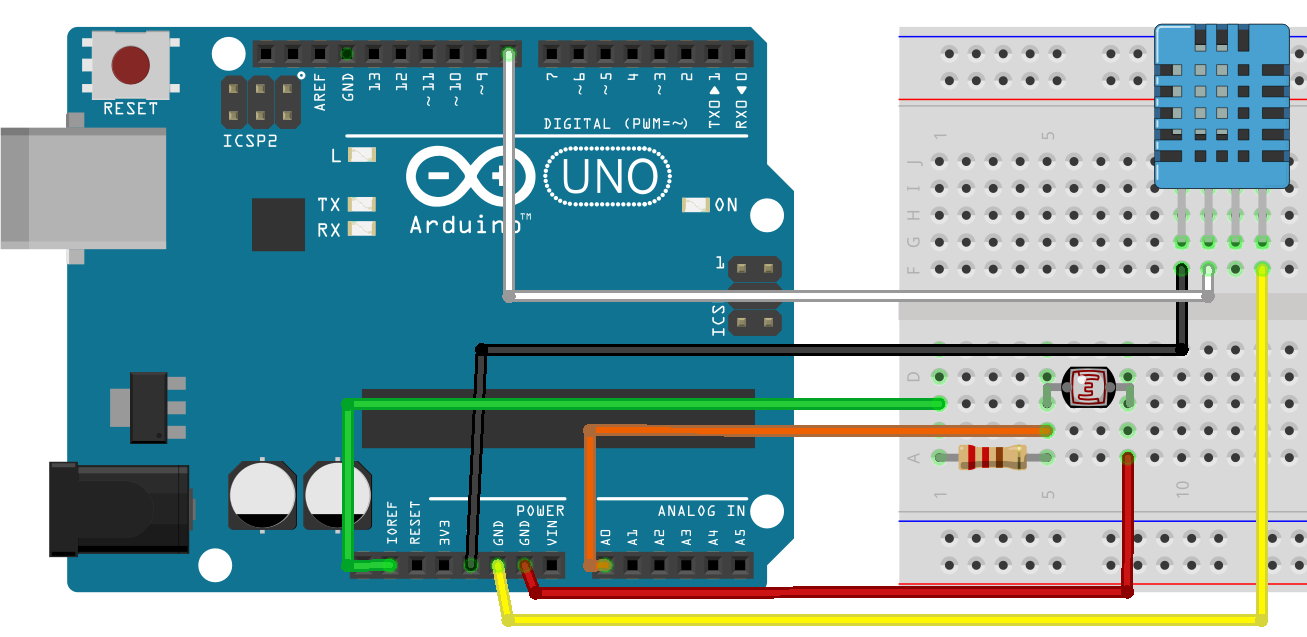
It was InterSystems hackathon time and our team, consisting of Artem Viznyuk and me had Arduino board (one) and various parts of it (in overabundance). And so like that our course of action was set - like all other Arduino beginners, we decided to build a weather station. But with data persistent storage in Caché and visualization in DeepSee!

8
0 1807
Article Murray Oldfield · Feb 20, 2017 3m read

Note (October 2022): yape has been deprecated and replaced by YASPE, there is no more development on yape.

Note (June 2019): A lot has changed, for the latest details go here

Note (Sept 2018): There have been big changes since this post first appeared, I suggest using the Docker Container version, the project and details for running as a container are still in the same place  published on GitHub so you can download, run - and modify if you need to.

5
2 1991
Article Murray Oldfield · Mar 25, 2016 14m read

This week I am going to look at CPU, one of the primary hardware food groups :) A customer asked me to advise on the following scenario; Their production servers are approaching end of life and its time for a hardware refresh. They are also thinking of consolidating servers by virtualising and want to right-size capacity either bare-metal or virtualized. Today we will look at CPU, in later posts I will explain the approach for right-sizing other key food groups - memory and IO.

So the questions are:

10
2 5280
Article Murray Oldfield · Mar 15, 2018 14m read

InterSystems Data Platform includes utilities and tools for system monitoring and alerting, however System Administrators new to solutions built on the InterSystems Data Platform (a.k.a Caché) need to know where to start and what to configure.

This guide shows the path to a minimum monitoring and alerting solution using references from online documentation and developer community posts to show you how to enable and configure the following;

  1. Caché Monitor: Scans the console log and sends emails alerts.

  2. System Monitor: Monitors system status and resources, generating notifications (alerts and warnings) based on fixed parameters and also tracks overall system health.

  3. Health Monitor: Samples key system and user-defined metrics and compares them to user-configurable parameters and established normal values, generating notifications when samples exceed applicable or learned thresholds.

  4. History Monitor: Maintains a historical database of performance and system usage metrics.

  5. pButtons: Operating system and Caché metrics collection scheduled daily.

Remember this guide is a minimum configuration, the included tools are flexible and extensible so more functionality is available when needed. This guide skips through the documentation to get you up and going. You will need to dive deeper into the documentation to get the most out of the monitoring tools, in the meantime, think of this as a set of cheat sheets to get up and running.

1
8 2382
Article Mark Bolinsky · Mar 18, 2016 9m read

++ Update: August 1, 2018

The use of the InterSystems Virtual IP (VIP) address built-in to Caché database mirroring has certain limitations. In particular, it can only be used when mirror members reside the same network subnet. When multiple data centers are used, network subnets are not often “stretched” beyond the physical data center due to added network complexity (more detailed discussion here). For similar reasons, Virtual IP is often not usable when the database is hosted in the cloud.

12
6 6807
Article Murray Oldfield · Mar 11, 2016 8m read

In the last post we scheduled 24-hour collections of performance metrics using pButtons. In this post we are going to be looking at a few of the key metrics that are being collected and how they relate to the underlying system hardware. We will also start to explore the relationship between Caché (or any of the InterSystems Data Platforms) metrics and system metrics. And how you can use these metrics to understand the daily beat rate of your systems and diagnose performance problems.

10
2 4229
Announcement Evgeny Shvarov · Jan 10, 2018

Hi, Community!

In 2017 we had 734 different contributors to Developer Community who posted articles and announcements, questions and answers.

This post is a compilation of Top Authors, Top Experts and Top Opinion Makers of InterSystems Developer Community in 2017.

It is a good guide "Who to Follow" in 2018.

And I'm glad to present these people!

0
0 472
Article Murray Oldfield · Nov 9, 2017 3m read

A request came from a customer to estimate how long it would take to encrypt a database with cvencrypt utility.

This question is a little bit like how long is a piece of string — it depends. But its an interesting question. The answer primarily depends on the performance of CPU and storage on the target platform the customer is using, so the answer is more about coming up with a simple methodology that can be used to benchmark the CPU and storage while running cvencrypt.

Methodology

0
1 1126
Article Murray Oldfield · Nov 25, 2016 23m read

Hyper-Converged Infrastructure (HCI) solutions have been gaining traction for the last few years with the number of deployments now increasing rapidly. IT decision makers are considering HCI when scoping new deployments or hardware refreshes especially for applications already virtualised on VMware. Reasons for choosing HCI include; dealing with a single vendor, validated interoperability between all hardware and software components, high performance especially IO, simple scalability by addition of hosts, simplified deployment and simplified management.

7
1 3753
Article Michelle Stolwyk · May 25, 2017 2m read

The Data Platforms department here at InterSystems is gearing up for this year's crop of interns, and I for one am very excited to meet them all next week!

We've got folks from top technical colleges with diverse specialties from hard core engineers to pure computer scientists to mathematicians to business professionals. They come from countries around the world like Vietnam, China, and Finland and they all come with impressive backgrounds. We're sure they will do very well this summer.

0
0 591
Article Murray Oldfield · Feb 26, 2016 13m read

Ansible helped me solve the problem of quickly deploying Caché and application components for Data Platforms benchmarks. You can use the same tools and methodology for standing up your test labs, training systems, development or other environments. If you deploy applications at customer sites you could automate much of the deployment and ensure that system, Caché and your application are configured to your applications best practice standards.

4
0 2758
Article Cindy Olsen · Nov 8, 2016 7m read

In this post I would like to talk about the syslog table.  I will cover what it is, how you look at it, what the entries really are, and why it may be important to you.  The syslog table can contain important diagnostic information.  If your system is having any problems, it is important to understand how to look at this table and what information is contained there.

1
2 2833
Article Murray Oldfield · Apr 1, 2016 3m read

A short post for now to answer a question that came up. In post two of this series I included graphs of performance data extracted from pButtons. I was asked off-line if there is a quicker way than cut/paste to extract metrics for mgstat etc from a pButtons .html file for easy charting in Excel.

See: - Part 2 - Looking at the metrics we collected

2
0 1576
Article Benjamin De Boe · Nov 3, 2016 16m read

This article contains the tutorial document for a Global Summit academy session on Text Categorization and provides a helpful starting point to learn about Text Categorization and how iKnow can help you to implement Text Categorization models. This document was originally prepared by Kerry Kirkham and Max Vershinin and should work based on the sample data provided in the SAMPLES namespace.

0
1 758
Article Mark Bolinsky · Jul 1, 2016 17m read

++Update: August 2, 2018

This article provides a reference architecture as a sample for providing robust performing and highly available applications based on InterSystems Technologies that are applicable to Caché, Ensemble, HealthShare, TrakCare, and associated embedded technologies such as DeepSee, iKnow, Zen and Zen Mojo.

Azure has two different deployment models for creating and working with resources: Azure Classic and Azure Resource Manager. The information detailed in this article is based on the Azure Resource Manager model (ARM).

4
0 12483
Article Mark Bolinsky · Feb 3, 2016 2m read

During recent large scale benchmarking activities, we were seeing excessive %sys CPU time that negatively impacted scaling of the application.

Problem

We have found that a lot of the time was spent in the localtime() system call due to the TZ environment variable not being set.  A simple test routine was created to confirm the observation, and the elapse time differences and CPU resources needed with TZ set versus TZ not set were astonishing.  It was discovered that the inherit use of stat() system calls to /etc/local_time from localtime() are very expensive when TZ is not set.

Recommendation

5
0 2893
Article Stefan Wittmann · May 31, 2016 12m read

Introduction

The field test of Caché 2016.2 has been available for quite some time and I would like to focus on one of the substantial features that is new in this version: the document data model. This model is a natural addition to the multiple ways we support for handling data including Objects, Tables and Multidimensional arrays. It makes the platform more flexible and suitable for even more use cases.

12
0 2786